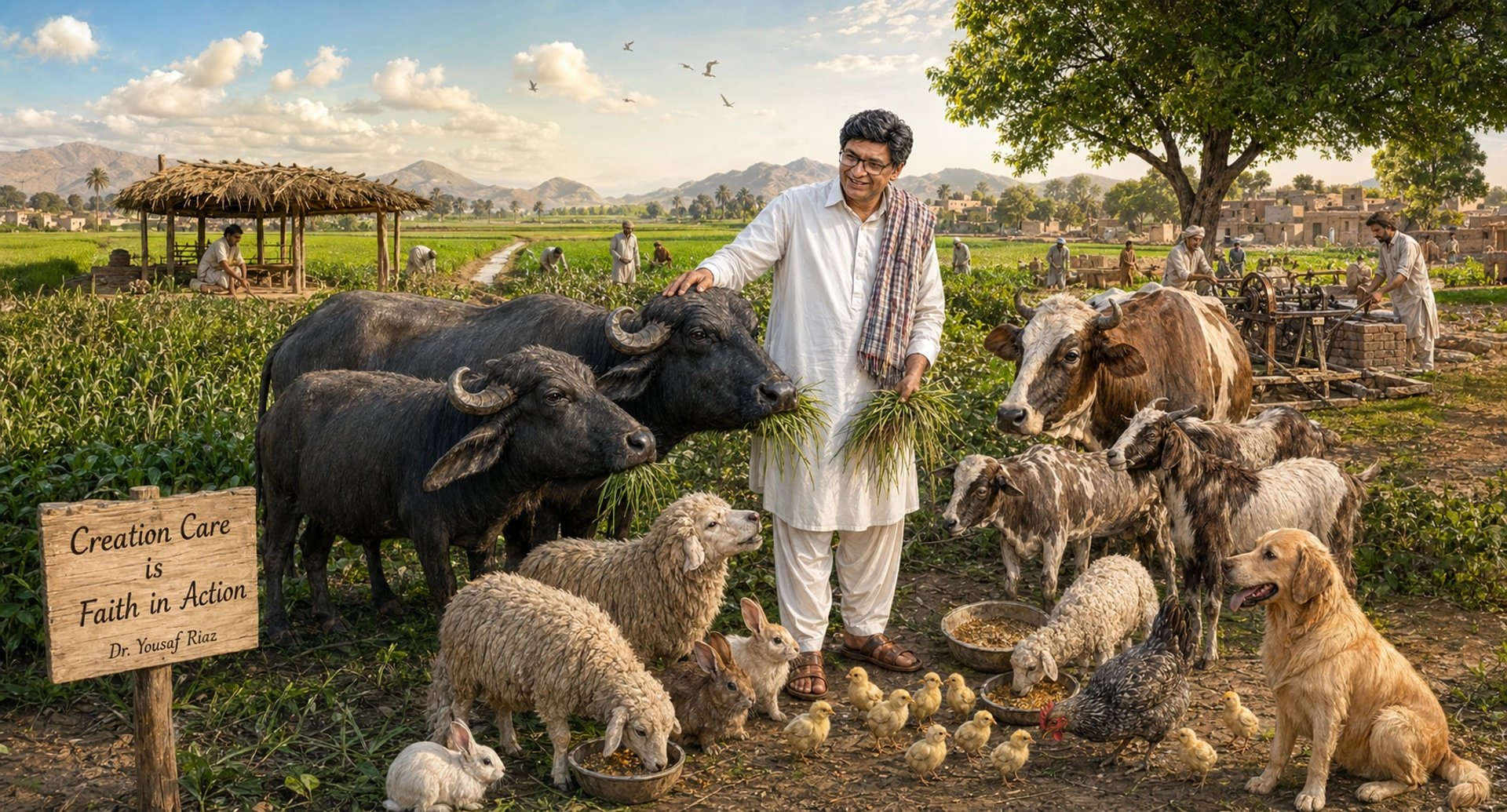
Dr. Yousaf Riaz comes from a lineage deeply rooted in the practical wisdom of optimizing natural resources—soil, water, and livestock—through generations of experience. This heritage was complemented by the integration of formal education, enabling a thoughtful blend of traditional knowledge and scientific understanding. By embracing agriculture-related practices with both insight and innovation, his family cultivated not only the land but also a mindset focused on enhancing productivity, sustainability, and responsible stewardship.
At the same time, his parents maintained a spacious home in the city, where he was encouraged to keep a variety of animals and nurture small plantations. This environment became a living classroom, allowing him to develop a practical understanding of the relationship between creation and the structures that sustain it. Alongside this, he was exposed to broader societal interactions and urban dynamics.
This dual upbringing—rooted in both rural immersion and urban experience—enabled him to observe and appreciate two distinct yet interconnected ways of life: one deeply tied to the land and natural cycles, and the other shaped by organized systems, learning, and social engagement.
From Roots to Mission
While his parents lived in an urban setting, his grandparents resided in the village, and many of his close relatives continued to live rural lives. This unique blend of urban exposure and rural heritage shaped his early worldview. A significant part of his childhood—both summer and winter holidays—was spent in the village, where he with his brothers and sisters experienced firsthand the rhythms of nature, farming practices, and community life.
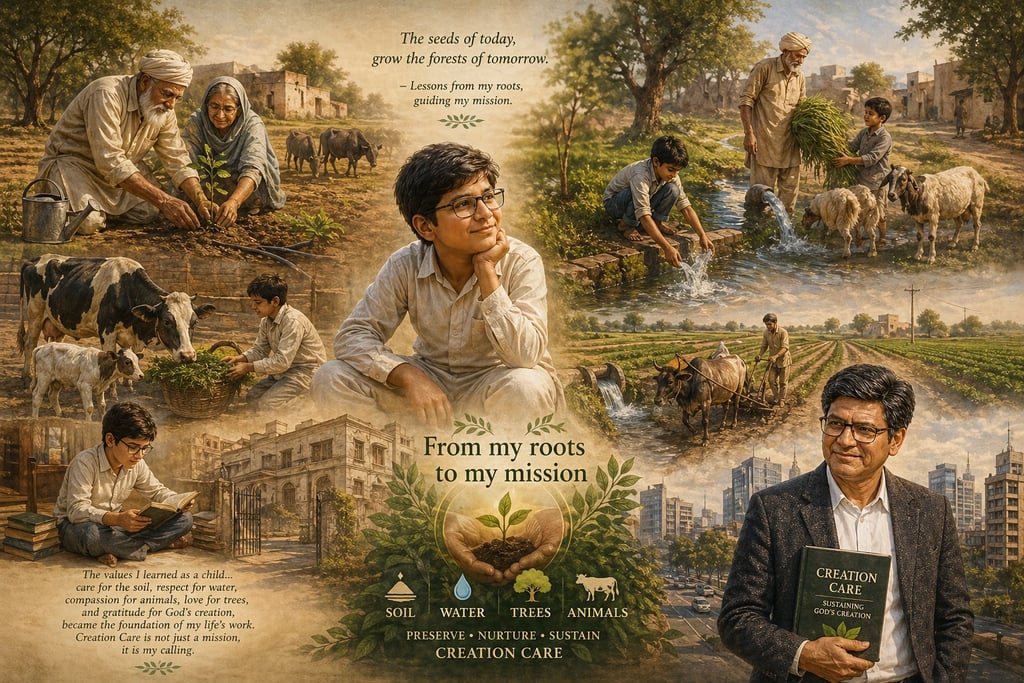
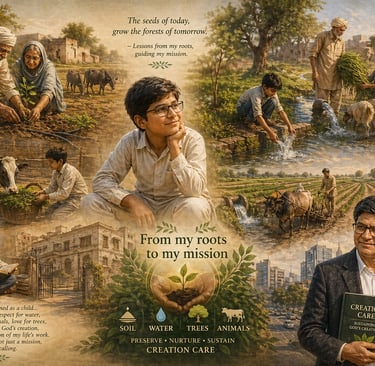
What left a lasting impression on him was the natural stewardship practiced by his elders. His parents and grandparents, whether consciously or instinctively, demonstrated a deep respect for natural resources. Water was used carefully, soil was nurtured, animals were treated with care, and vegetation was preserved as a source of life and livelihood. Even elements like air and wind—though less visible—were regarded with a sense of respect, as part of the natural balance that sustains life.
These early observations quietly shaped Dr. Yousaf’s understanding of sustainability. He came to recognize that caring for natural resources was not merely a practice but a way of life—rooted in wisdom, necessity, and respect for creation. This foundation would later influence his scientific work and his commitment to promoting “Creation Care” as an integrated approach to environmental stewardship and human well-being.