
Bio-remediation in Leadership Spaces
Dr. Yousaf Riaz has worked across multiple fronts to rehabilitate polluted (“sick”) water and conserve freshwater resources. Together with his team, he identified and applied locally available microbes and aquatic plants to treat contaminated water through nature-based solutions.
Beyond field implementation, he has strategically shared these concepts at higher-level policy forums, advocating for the integration of bioremediation into decision-making and sustainable water management practices.
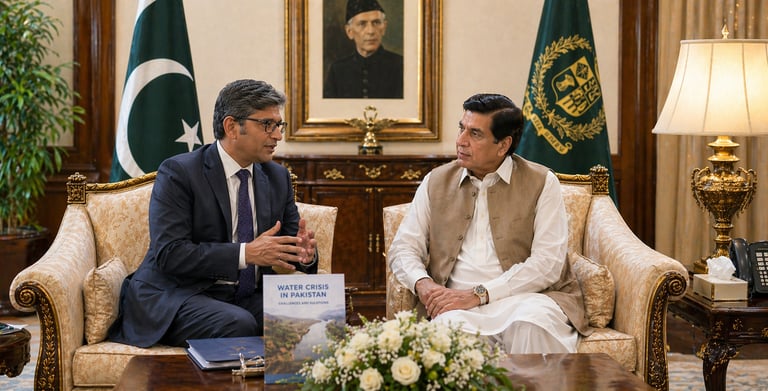
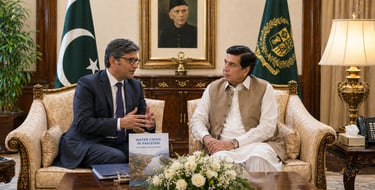
On January 13, 2012, Mr. Yousaf Riaz met Prime Minister Raja Pervaiz Ashraf to present the work of the National Institute of Bio-remediation (NIB) in reclaiming contaminated water for safe reuse and preventing pollution of scarce freshwater resources. He also briefed the Prime Minister on NIB’s ongoing research and development efforts aimed at maintaining clean and sustainable water systems. Impressed by the initiative, the Prime Minister directed the Punjab authorities to expedite the establishment of the “Bio-remediation Institute – Green City Lahore.”
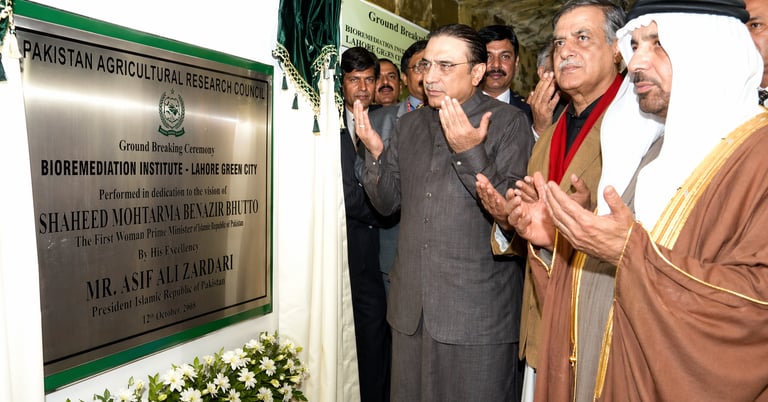
The groundbreaking ceremony of the “Bio-remediation Institute – Green City Lahore” was held at the Governor House, Lahore, on January 10, 2012, and was inaugurated by the President of the Islamic Republic of Pakistan, Mr. Asif Ali Zardari. Following this milestone, the Planning Department of the Government of Punjab, in close coordination with relevant departments and the NIB team, conducted detailed assessments and strategic planning to establish the institute in Lahore—the provincial capital—aimed at advancing sustainable solutions for water treatment and environmental protection.
The journey of bio-remediation began in 1995—not merely as a technical pursuit, but as a vision to restore life where degradation had taken hold. What started as a quiet, experimental effort gradually evolved into a powerful movement for reclaiming polluted water and rethinking how natural systems can serve human needs. Through persistence, field-based learning, and continuous refinement, bio-remediation moved beyond theory to become a practical, scalable solution. Each challenge strengthened its foundation, each success amplified its voice—until it reached the highest levels of national attention, proving that nature-based solutions can transform both environment and economy.
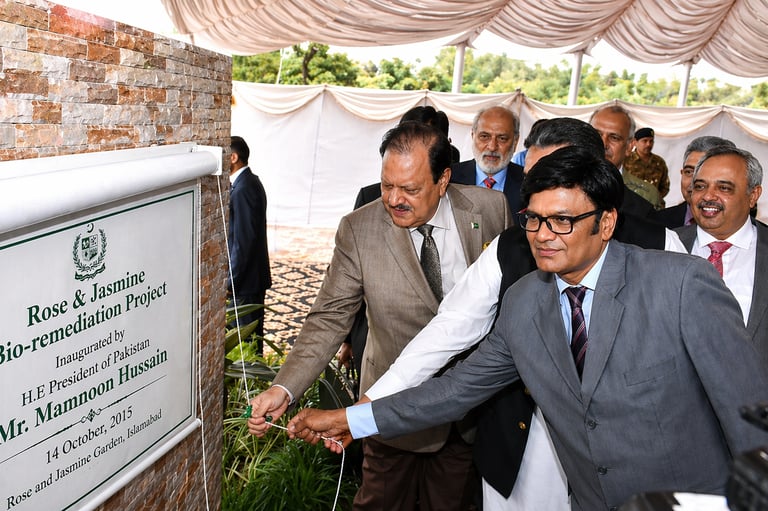
Its ability to combine science, sustainability, and beauty captured the attention of a joint evaluation team from the Ministry of National Food Security & Research and the Planning Commission of Pakistan. Recognizing its transformative potential, the project was recommended for inauguration at the highest level, symbolizing national endorsement of bio-remediation as a forward-looking solution. Consequently, it was inaugurated by the President of Pakistan, Mr. Mamnoon Hussain, on October 14, 2015. This moment marked more than the opening of a project—it signified a shift in thinking, placing nature-based solutions at the center of sustainable water management and environmental stewardship in Pakistan.
A defining milestone in this journey was the bio-remediation project at Rose & Jasmine, which stood as a living demonstration of what integrated natural systems can achieve. The project did not only deliver technically sound results in treating wastewater; it also proved economically viable and visually appealing—transforming a polluted space into a productive and aesthetically pleasing environment.
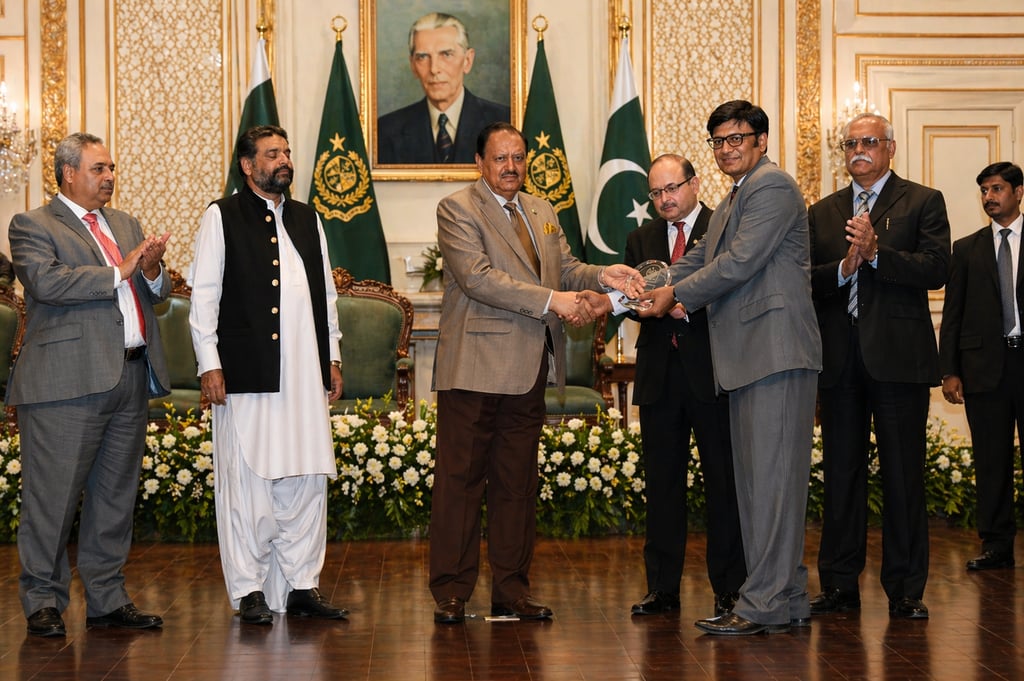
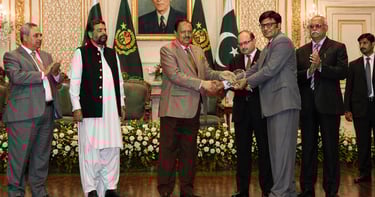
This image captures a moment of national recognition, as Dr. Yousaf Riaz receives the Presidential Award from the President of Pakistan in 2015. The honor acknowledges his pioneering contributions in developing nature-based solutions tailored to Pakistan’s water-scarce conditions. By intelligently utilizing aquatic plants, beneficial microbes, and bio-engineering techniques, he successfully demonstrated how used and contaminated water can be reclaimed and reused. His work reflects an innovative integration of science and natural systems, offering sustainable pathways to conserve precious water resources and support environmental resilience in the country.
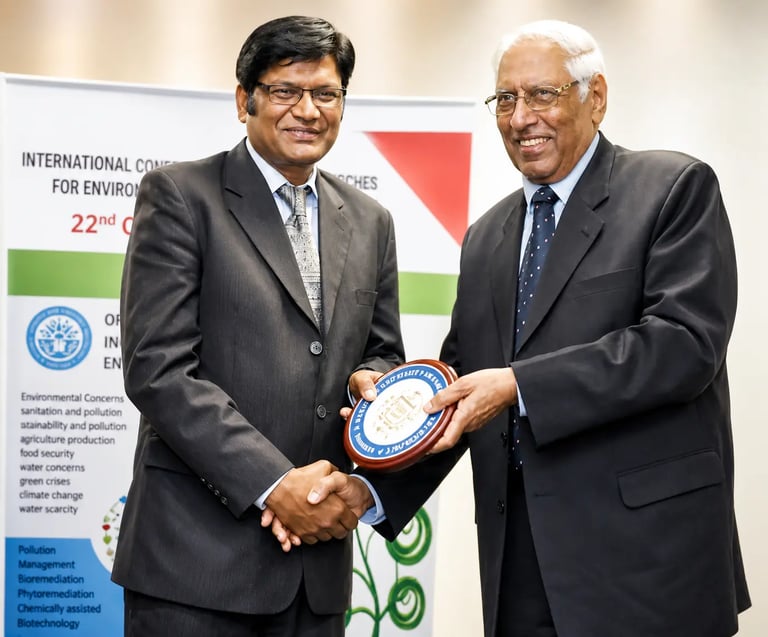
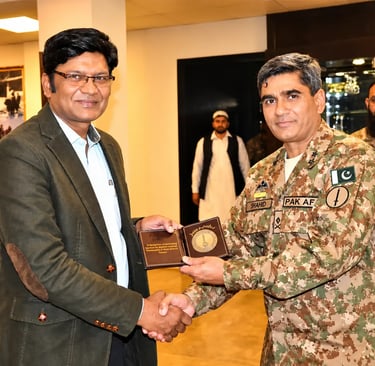
Dr. Amir Muhammad, former Chairman of the Pakistan Agricultural Research Council (PARC) (1978–1991), recognized and awarded Mr. Yousaf Riaz, Director of the National Institute of Bio-remediation (NIB), NARC, for the successful replication of bio-remediation applications at the National University of Sciences and Technology (NUST). This achievement demonstrated the adaptability and effectiveness of nature-based solutions in academic and institutional settings, further strengthening the case for their wider adoption. Mr. Yousaf Riaz and his team were also highly appreciated for their active collaboration in organizing the event on “Bio Applications for Environment and Sustainability” at NUST, contributing to knowledge sharing, capacity building, and promoting innovative approaches to environmental management.
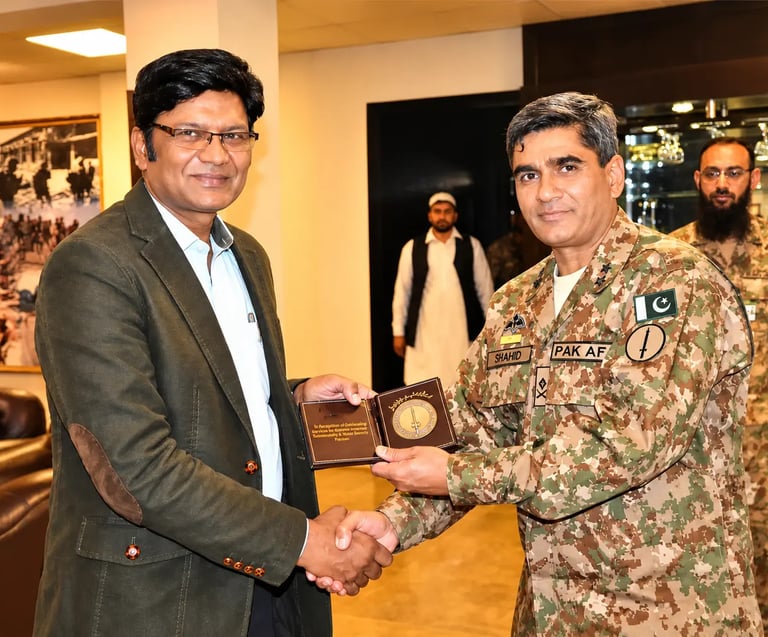
Major General Shahid Nazir, known for his deep concern for water health and environmental sustainability, played a pivotal role in advancing the journey of bio-remediation. His leadership and support helped promote awareness and facilitate the adoption of bio-remediation applications across cantonment areas, turning vision into practical implementation.
In recognition of his impactful contributions, Dr. Yousaf Riaz was honored on May 17, 2016, for successfully introducing and applying bio-remediation technology to treat used water and reduce pollution in cantonment regions—demonstrating a sustainable and scalable model for cleaner water management
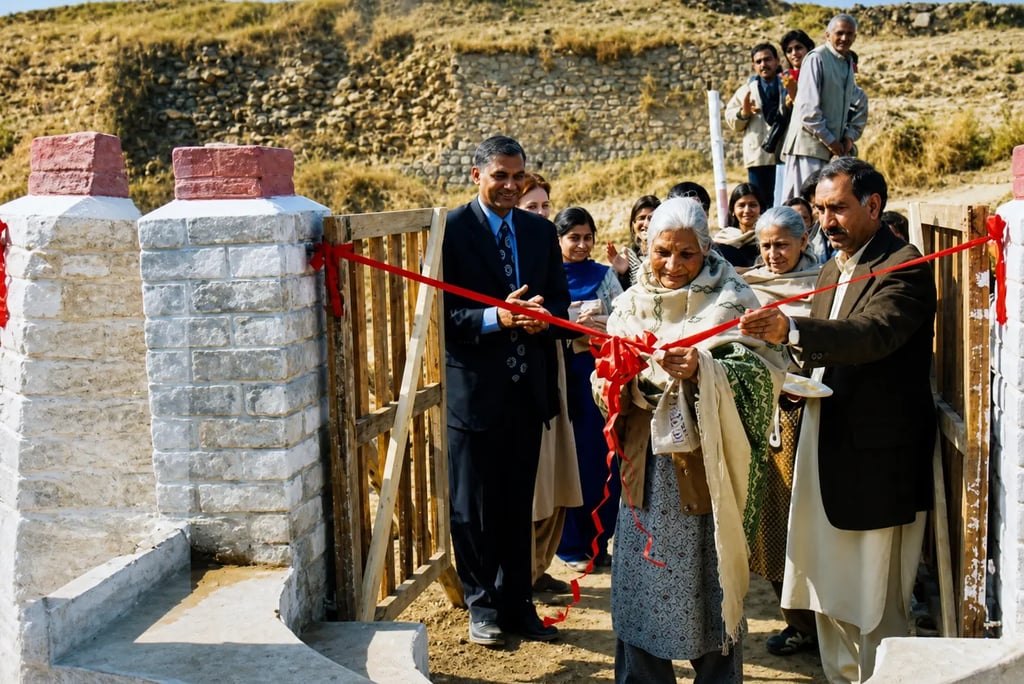
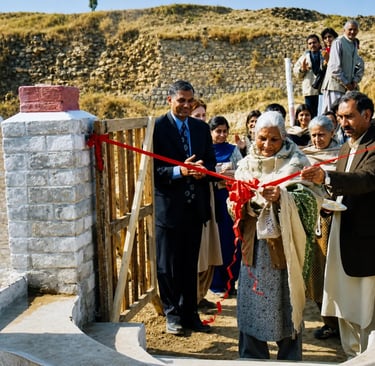
Dr. Yousaf Riaz felt deeply honored to have his first project, the “Integrated Sanitation & Farming System,” inaugurated by his mother, Mrs. Parveen Sardar Masih, on March 15, 1997, in Village Gangu Juma, Taxila (Rawalpindi), Pakistan. This initiative, supported by UNICEF, was completed nearly six months ahead of schedule—demonstrating both efficiency and strong resource management, resulting in significant cost savings.
The timely and successful completion earned high appreciation from UNICEF representatives, who acknowledged the project’s impact and effectiveness. Recognizing the presence and contribution of Dr. Yousaf’s family, they extended a special honor by inviting his mother to inaugurate the project.
For Dr. Yousaf Riaz, this was not just a professional milestone, but a deeply meaningful personal moment—where his journey of service, innovation, and family values came together in a powerful and memorable way.
...anytime, anywhere—Yousaf is ready to answer your call in service of Creation...


© 2025. All rights reserved.
+92-313-1510171
Messages only
contact@yousaf-riaz.me